Uncategorized
False, False, False
FALSE!
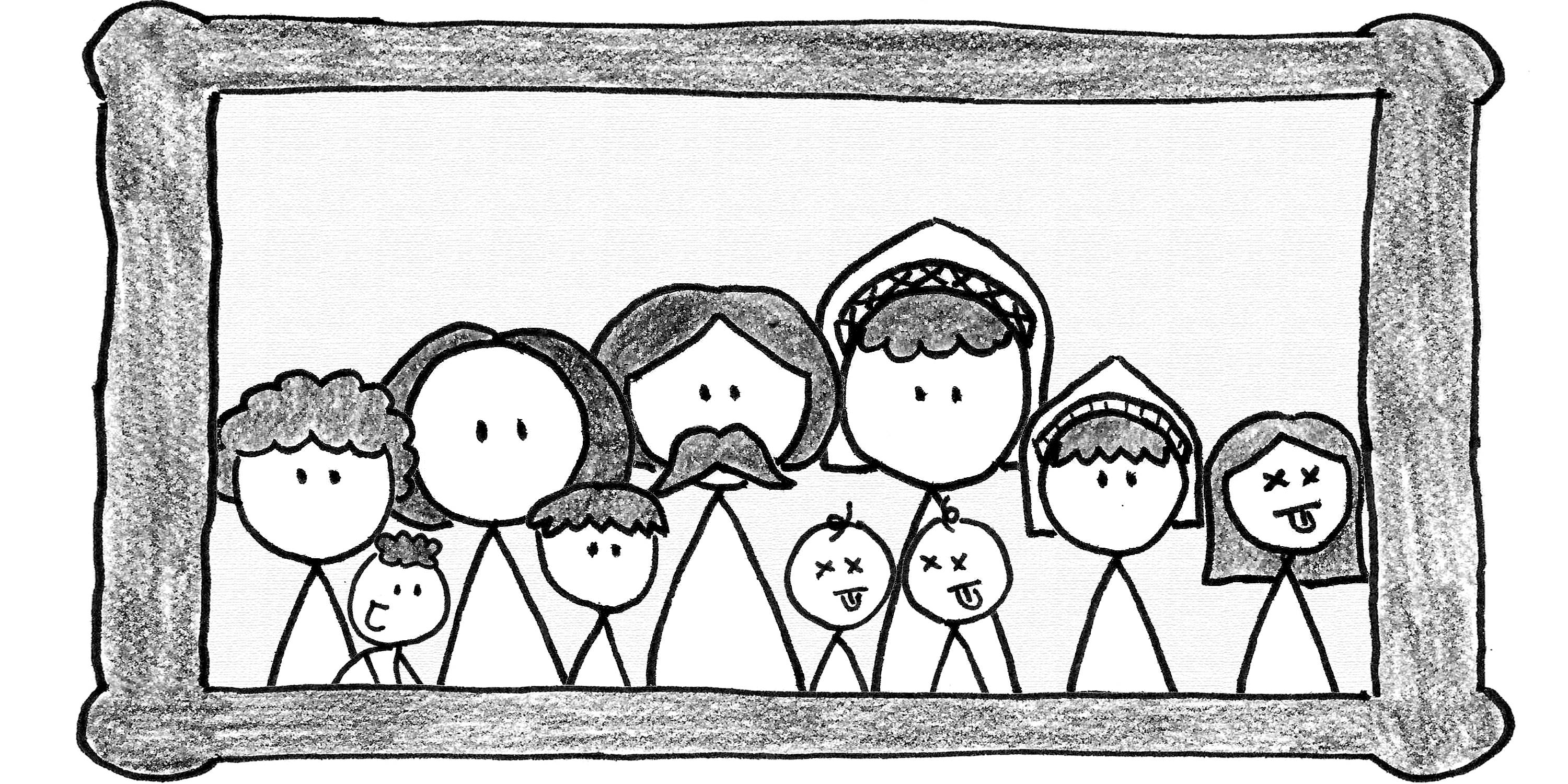
William was, in fact, the eldest surviving son of John and Mary Shakespeare. The couple had 8 children, 3 of whom died during childhood.

Unknown birthdate
TRUE!

The record of baptism was made in Latin on April 26th 1564. However, it was unusual for infants to be baptised on their birthday. It is assumed that he was born 2-3 days before the record was made on April 23rd.

Seal
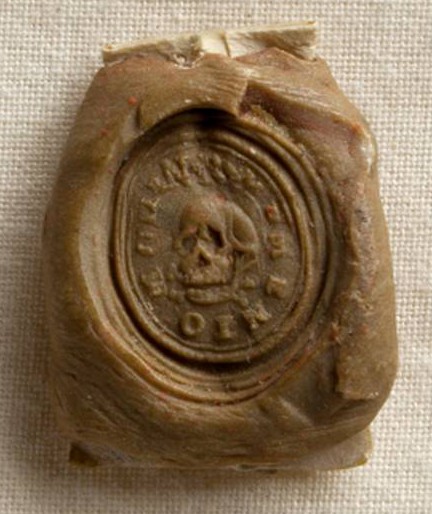
- The seal impression and matrix date from the reign of Queen Elizabeth I
- Depicts a death’s head with the inscription N R Memeto Mori (remember that you will die)
- Seals ensured documents were safe and official
(Click here to learn more about this seal in our collection)
Click the links below to discover more:
Wax seals
Bonds and seals in Shakespeare
Bronze Skillet
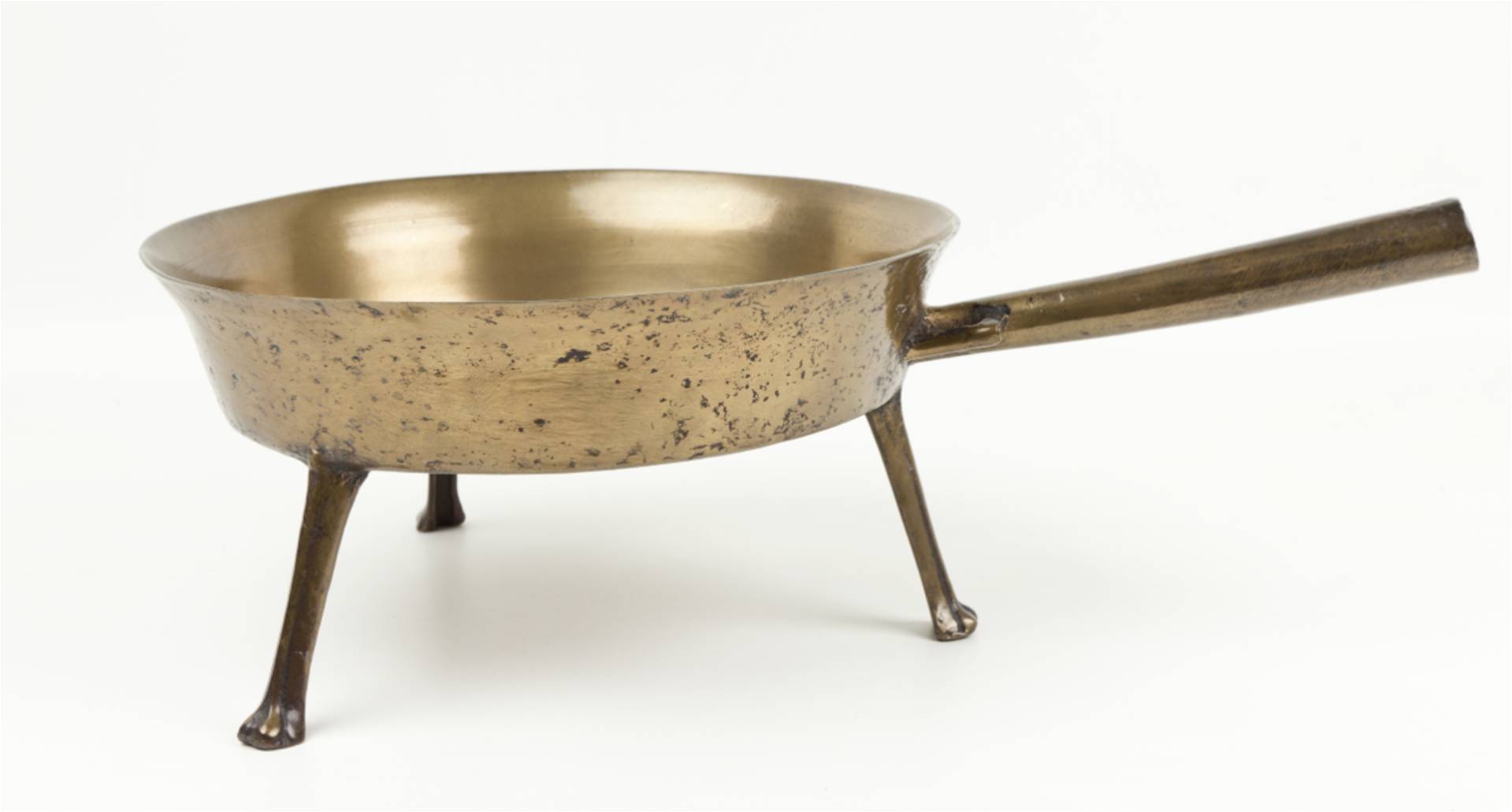
- Made from bronze stood on a tripod base
- An example of quality Tudor kitchenware
- Used for preparing dishes over heat
Click the links below to discover more:
Use of metal kitchenware
Kitchenware in Shakespeare
BROOCH
 A decorative pin used to fasten garments together and act as an ornament
- Shakespeare usually has lovers and families exchange jewels in his plays
- Another token of affection between couples
(To learn more about another brooch in our collection click here.)
Click the link below to discover more:
Jewellery in Shakespeare
Ring

- Signet ring discovered in 1821
- Used to identify important individuals (e.g. bishops, clergymen, nobility)
- Often exchanged as tokens of love
(Click here to learn more about this signet ring in our collection)
Click the links below to discover more:
Variations of ring during the 16th-17th century
Rings in Shakespeare
MILLENNIUM ATMOS CLOCK
-
-
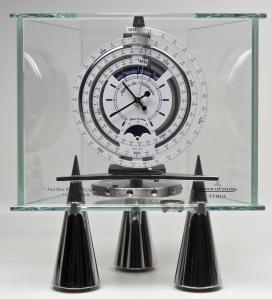
The Millennium Atmos Clock

- Donated to the Trust by George Pragnell in 2000
- It does not require winding
- Designed to run for 3000 years
Click the links below to discover more:
Atmos Clocks
Time and Clocks in Shakespeare
KING JOHN
King John became King of England in 1199 at age 33 after the death of his elder brother, Richard I, sometimes knows as Richard the Lionheart. John was infamous for having lost the Northern French territories in battle and spending unfeasible amounts of money and resources seeking to reclaim them. After taxing and alienating the nobles of England, the barons colluded against John and forced him to seal a charter that would limit the King’s power to impose laws and taxes throughout England. Although an early failure to adhere to the rules of the Magna Carta led to a civil war, it was renewed under subsequent monarchs and still is considered to be the starting point of the guarantee of civil liberties in the modern world.
Shakespeare’s King John was written in 1596, and is the earliest period covered in the history plays, despite not being the first history play that he wrote. During the course of the play, King John gains an ally in the form of Richard I’s illegitimate son, the Bastard Falconbridge, who leads the English troupes in the battles against France. John fails to broker an agreement with the King of France and is excommunicated by Cardinal Pandulph after insulting the Pope. This leads to a war with France and the kidnapping of Prince Arthur – the legitimate heir to the throne. Arthur is killed in a failed escape attempt, leading the English barons to feel distrust and anger towards King John. After offering their allegiance to Louis the Dauphin, the barons engage in a civil war with John’s army. When the barons are defeated, they defect back to John who, in the meantime, has been poisoned by a rebellious monk. John dies of this poisoning and bequeaths his kingdom to his only son, Prince Henry.
On display is a copy of Holinshed’s Chronicles of England from which Shakespeare took much of the plot for his dramatic re-telling of King John’s history. To find out how Shakespeare deviates from Holinshed, follow this link: http://bloggingshakespeare.com/shakespeares-sources-king-john
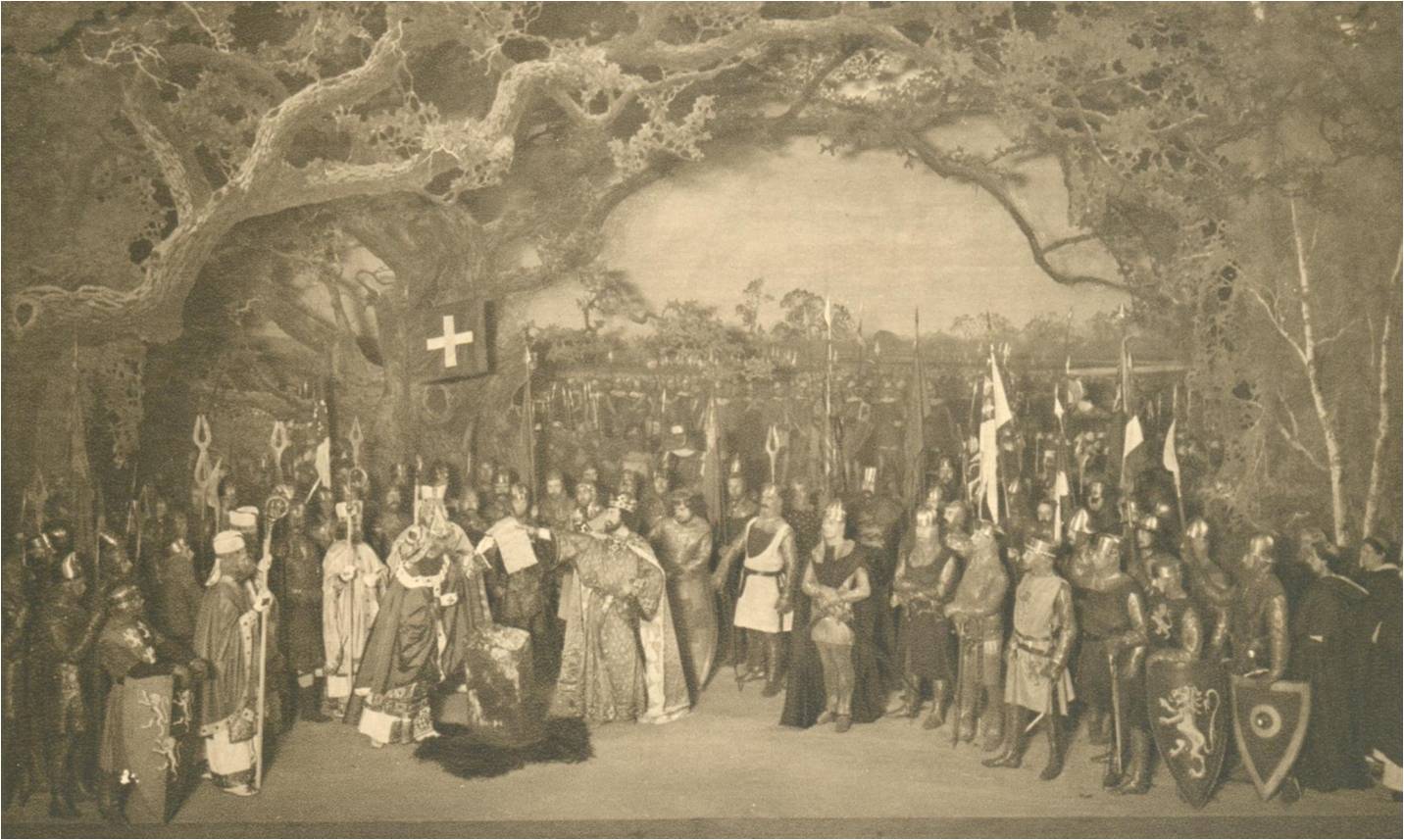
Although King John is not frequently staged, it was a relatively well-known play throughout the 19th century. To find out more about the Victorians and King John, read this blog: http://bloggingshakespeare.com/king-john-a-play-for-all-time. You can see an image of the actor Sir Herbert Beerbohm Tree playing King John in a lavish production from 1899. This was also the very first performance of Shakespeare to be filmed. The silent, black-and-white footage of King John dying of poisoning can be seen here:
Tree’s production also doubled as a celebration of the Magna Carta. During the action, Tree inserted a tableau that depicted John handing over the document to the barons. King John actually sealed rather than signed the Magna Carta, and you can discover more about seals by clicking here.

- King John and the handing over of the Magna Carta in Herbert Beerbohm Tree’s 1899 production
STRATFORD TOWN MACE

The Stratford mace is made of silver-gilt iron and probably dates back approximately 1475. It was made for the Guild of the Holy Cross in Stratford, which was a church organisation and a social power within the town of Stratford. It prospered during the 15th century, building a new guild hall, a school and almshouses for the poor and infirm. However, Henry VIII’s reformation led to the suppression of religious organisations like the Guild, and all its properties were confiscated by the Crown until they were granted to the newly chartered (and Protestant) Corporation of Stratford-upon-Avon in 1553. The Corporation decided to use the Guild’s old mace in their own ceremonies, but they ordered the silver gilt to be added, as well as their own coat of arms.
Consequently, this mace reflects the religious upheavals throughout England in the 16th century. Another interesting connection to Shakespeare is the fact that his father, John Shakespeare would have used this mace during his time as the High Bailiff of Stratford from 1568 to 1569 to invest his person with the legitimate power of the mayor of Stratford – as one prop of ‘ceremony’.
Here is Henry, formerly Prince Hal of Eastcheap, now king of England, about to engage the French in a battle he is almost certainly going to lose. Having just felt the temperature of his troops the night before the battle, he muses about the difference between kings and commoners. Other than ceremony, he concludes, it really is the care for his country that sets kings apart, but it is those symbols of power, “the sword, the mace, the crown imperial” that are visible to the people.
HENRY
[…] I know
‘Tis not the balm, the sceptre and the ball,
The sword, the mace, the crown imperial,
The intertissued robe of gold and pearl,
The farced title running ‘fore the king,
The throne he sits on, nor the tide of pomp
That beats upon the high shore of this world,
No, not all these, thrice-gorgeous ceremony,
Not all these, laid in bed majestical,
Can sleep so soundly as the wretched slave
(Henry V, 4.1, 2105-2114)
Symbols of power are an easy means to visualise and translate any governor’s claim to rule to the common people. Whoever wears the crown, sceptre and orb is furnished with political power and privileges, and Shakespeare makes ample use of these props in his histories.
The same symbolism underwrites the use of a ceremonial mace, a sceptre-like object which was carried in front of town representatives – like mayors and bailiffs – at official occasions. Originally proper medieval maces were used in close combat as a slightly more sophisticated kind of a club, but ceremonial maces like the one in the current Trust Treasures exhibition started to lose the visual connection to medieval weaponry and became ever more decorative, as its function became purely symbolic.
- ← Previous
- 1
- …
- 3
- 4
- 5
- Next →
 Shakespaedia